Shavuos Correction

Written by: michael

The most recent Carnegie Shul Chatter incorrectly says that Shavuos begins at sundown Monday evening.   It is actually Tuesday evening.  Services are Wednesday and Thursday mornings at 9:30.  Yizkor is observed on Thursday.

Leave a Comment

Filed under Uncategorized

Carnegie Shul Chatter – May 10,2013

Written by: michael

Candle lighting time is 8:06

Parshah Bamidbar

This week we begin the book of Numbers with parshah Bamidbar.  The Children of Israel are in the desert in the second year of their journey from Egypt to  the Promised Land when God instructs Moses  to conduct a census  of all men between 20 and 60 years of age who would be available for war.  The tribe  of Levi is excluded because, “you shall appoint the Levites over the Tabernacle of the Testimony, over all its vessels and over all that belong to it; they shall carry the Tabernacle and they shall minister to it, and they shall encamp around the Tabernacle.”

The total census was 603,550 men and 22,300  Levites who were one month of age or older.

Following the census, the Israelites continued their journey.  The Levites camped in a circle around the Sanctuary, while the other tribes camped in groups of three tribes each outside of the Levite circle.

Shavuos

This week we observe the holiday of Shavuos, the Feast of Weeks,  for two days beginning at sundown on Monday.  Shavuos commemorates the giving of the Torah on Mt. Sinai.  We, therefore, read the Ten Commandments in shul on Shavuos.

The Book of Ruth is also read on Shavuos.  Ruth was a Moabite who converted to Judaism and told her mother in law, Naomi,  “Where you go I will go, and where you stay I will stay. Your people will be my people and your God my God. Where you die I will die, and there I will be buried. May the Lord deal with me, be it ever so severely, if even death separates you and me.”  Ruth was also the great-grandmother of King David.

Traditionally many Jews eat dairy on Shavuos and cheesecake is a popular Shavuos treat.

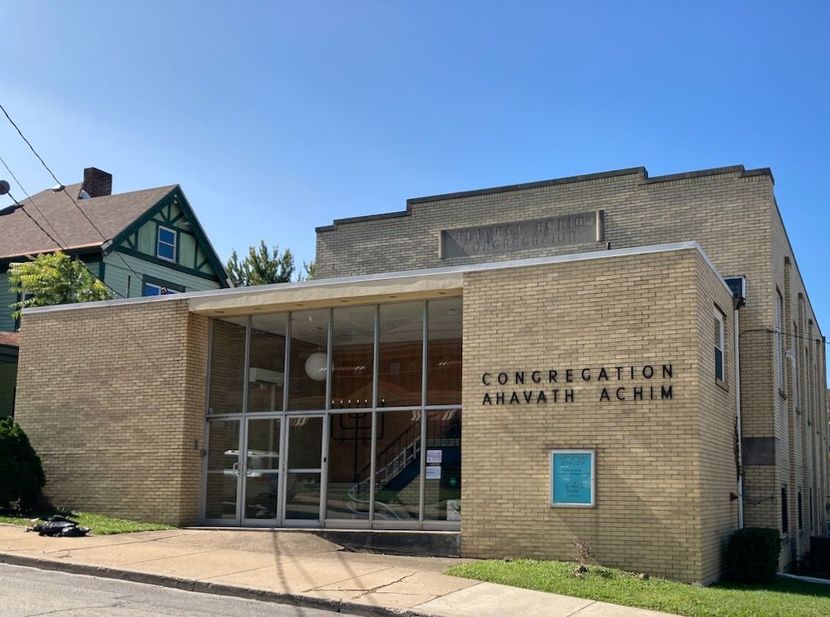
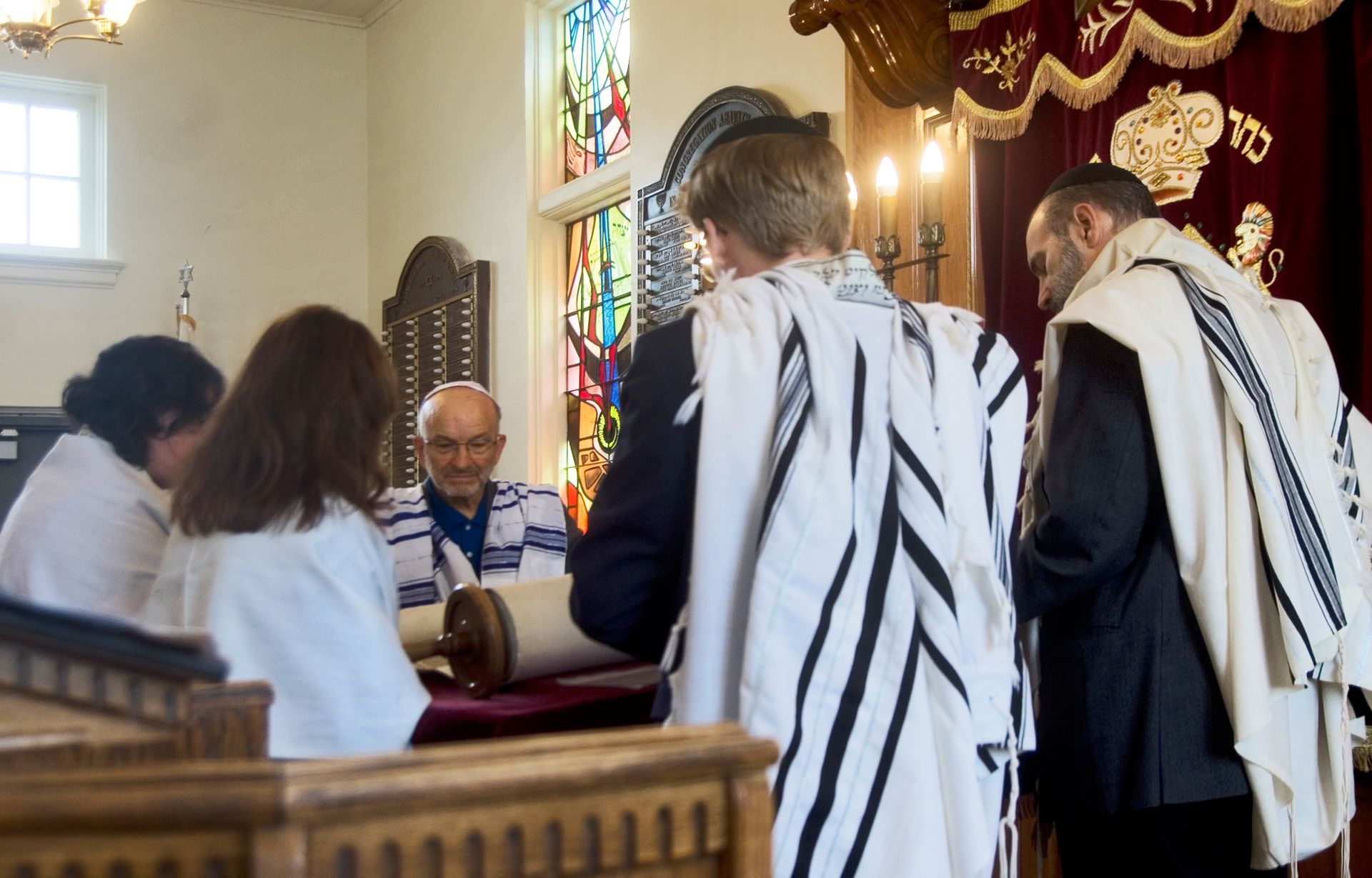
Come pray with us on Tuesday and Wednesday mornings when services will begin at 9:30.


Happy Mother’s Day to all of our wonderful Mothers!


???

Here is an interesting question for you to ponder.   Can God create a rock that is too heavy for Him to lift?  If you said yes, are you saying that there something is God can not do – that he can not lift a rock.  If you said no, are you saying that there is something that God can not do – that he can not create an enormous rock.

But isn’t God capable of doing anything?

Please feel free to comment.

Leave a Comment

Filed under Uncategorized

Written by: michael

Candle lighting time is 7:59

Behar-Bechukosai

This shabbos we have another double parshah as we close out the Book of Leviticus.

Leviticus is a book of laws.  Most of these laws have been taken by the Rabbis to be eternal laws, while some laws have been treated as suspended by the Rabbis, such as the laws of sacrifice, until such time as the Temple is rebuilt.  In some instances God specifically says that the law shall be in force for all time, such as when God proclaims the Day of Atonement, saying to Moses, “And it shall be a statute for ever unto you : in the seventh month on the tenth day of the month ye shall afflict your souls, and shall do no manner of work, the home-born, or the stranger that sojourneth among you.”  And yet other laws in Leviticus do not begin with this same reference to to a law as being a statute forever.  And so there are those who argue that perhaps those laws were intended only for that period of time when the Jews were wandering in the desert, and perhaps were never meant to be eternal laws.

This week’s parshah includes laws relative to the Sabbatical and Jubilee years, laws that are rarely, if ever, followed today.  They deal with redistribution of property rights, the charging of interest, and even the freeing of slaves.  Are these laws applicable to today?  Are they laws that were only applicable to the time when they were given?  And if they are no longer applicable today, then what of the other laws that do not specifically say that they, “shall be a statute for ever unto you”?  If all laws are forever, why does God distinguish some as eternal?

Today’s parshah also includes some very serious punishments for those who do not follow the Laws set forth in Leviticus, including the punishment that, “he shall surely be put to death.”    Does this death sentence mean that violators are to be physically put to death, or is this death a spiritual death from which a person can recover through atonement?

I do not pretend to know all of the answers to the questions that I have raised, but they are certainly something to think about.

Yes, a very interesting parshah, and a very interesting book this Book of Leviticus.


Leave a Comment

Filed under Uncategorized